How often do we see videos of residents taking to the streets across Jammu and Kashmir, demanding drinking water, power restoration, better education, better health, or road repairs?
How often do citizens find themselves visiting government offices repeatedly, hoping that someone in authority will simply listen and follow up on their concerns?
These scenes are familiar to anyone who follows public life in the Valley. In every district, civic problems are a daily reality. Pulwama is no exception, and grievances over basic public utilities have always existed here. But the true character of a district administration is not defined by whether complaints arise. It is defined by how officials respond when those complaints reach their desks. Do files gather dust, or does the administration act with urgency?
For the people of Pulwama, and for our team at Rahmoo Public Interest, the tenure of Dr. Basharat Qayoom, IAS, stood out precisely because of how he chose to handle public concerns.
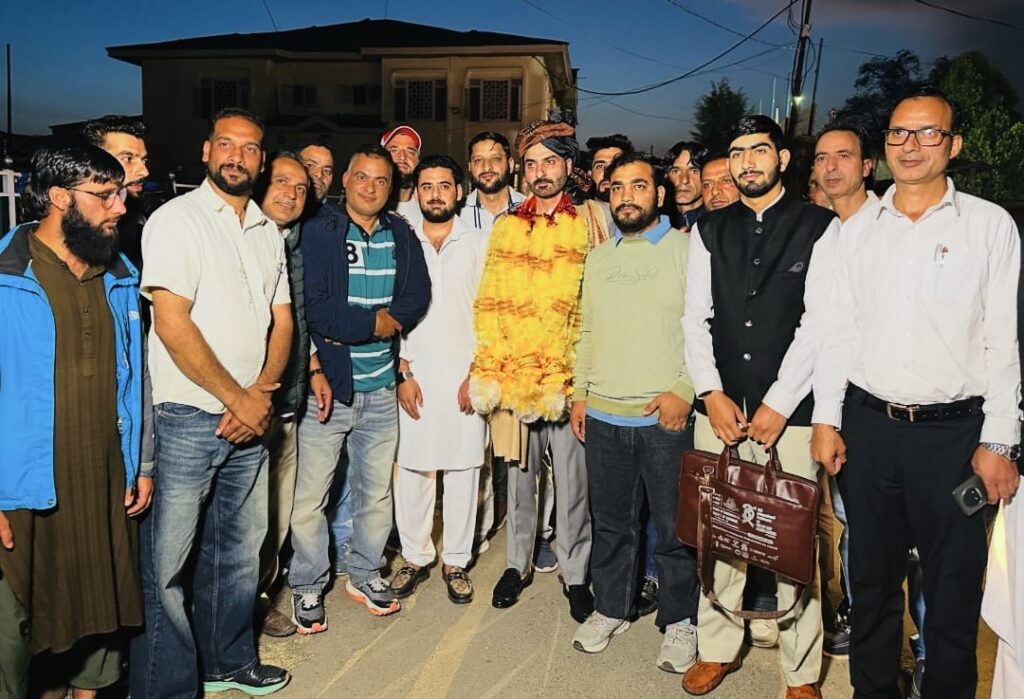
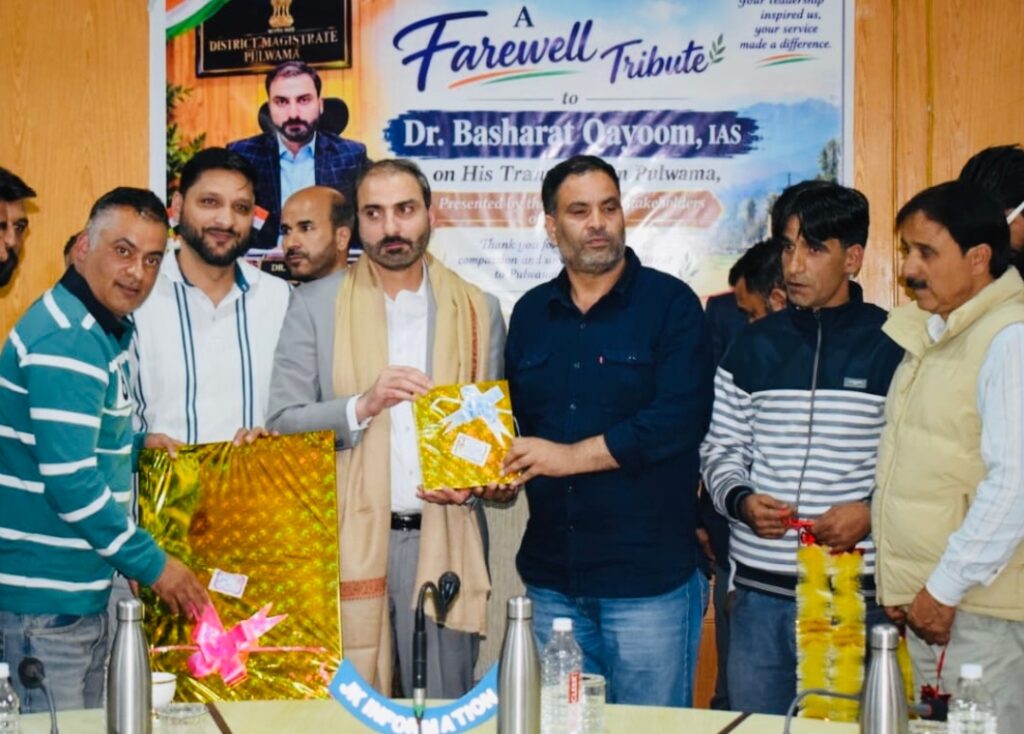
On 7 October 2026, the Government of Jammu and Kashmir transferred Dr. Basharat Qayoom from his position as Deputy Commissioner of Pulwama, appointing him as Commissioner of the Srinagar Municipal Corporation, along with the additional charge of Chief Executive Officer of the Srinagar Smart City project. His transfer brings to a close a tenure that began on 27 April 2023.
Over these three years and five months, his leadership touched critical public projects, rural connectivity, youth development, and grassroots grievance redressal. As he takes on his next assignment in Srinagar, it is worth looking back at the work, the milestones, and the administrative style that defined his time in Pulwama.
An Open Door and Prompt Action
For any community-led organization like Rahmoo public Interest (RPI), interacting with the district administration can often feel slow and bureaucratic. Legitimate community needs can get caught in endless procedural loops between different departments.
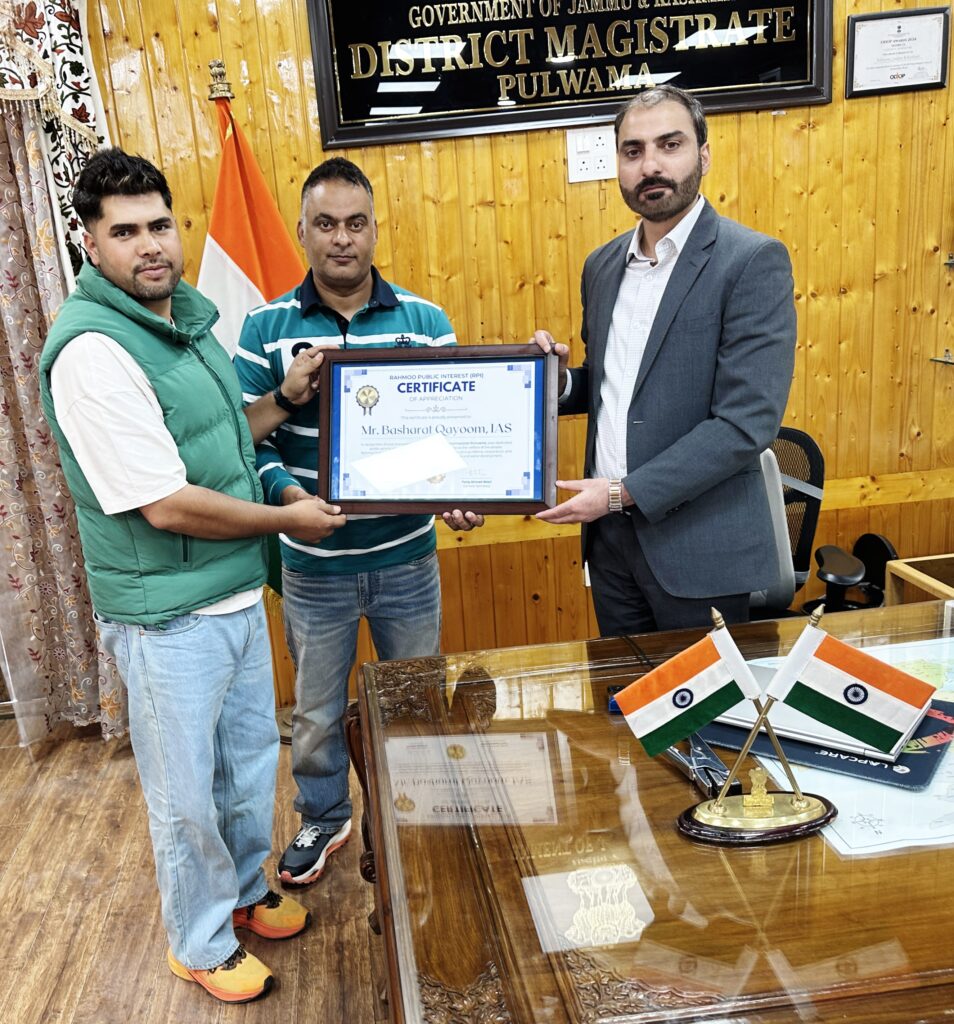
During Dr. Basharat Qayoom’s tenure, our experience at Rahmoo Public Interest was distinctly different.
Whenever RPI routed genuine public grievances to the Deputy Commissioner, whether they concerned drinking water supply, electricity disruption, or damaged rural infrastructure, his office responded with remarkable promptness. He did not treat community petitions as routine paperwork. Instead, he directed the concerned departments to examine the issues and push for practical resolutions. This is not merely our institutional assessment; RPI members across the organisation stand as witnesses to this experience.
Equally important was his accessibility. In public administration, emergencies and community crises do not follow a strict nine-to-five schedule. In our interactions, we found an administrator who was reachable and willing to listen even outside routine office hours when urgent public matters required intervention.
Since the announcement of Dr. Basharat Qayoom’s transfer, we at Rahmoo Public Interest (RPI) have spoken to local residents about their feelings regarding his departure. The sadness expressed by many reflects how deeply his departure is being felt across the district. People have shared their appreciation for his tenure and their wishes for his future responsibilities. For us at RPI, these conversations have been a reminder of the lasting impression an officer can leave on the people he serves.
If there is one infrastructure project that highlights the impact of administrative intervention during this period, it is the Ruma Reshi Bridge over the Romshi rivulet.
The bridge serves as a crucial link connecting Rahmoo in Pulwama with neighboring Budgam district. During the catastrophic floods of September 2014, the old permanent bridge was washed away. For more than ten years after that disaster, thousands of commuters, apple growers, patients, and students had to depend on a temporary Bailey bridge. The single-lane temporary structure caused constant bottlenecks, particularly during the fruit harvest season when heavily loaded trucks struggled to pass.
Years passed, but the permanent replacement bridge moved at a slow pace, weighed down by procedural delays and technical bottlenecks. For the residents of Rahmoo and surrounding areas, it felt like an endless wait.
That changed through consistent administrative follow-up during Dr. Qayoom’s tenure.
As reported by Kashmir News Observer on 8 February 2025, the permanent Ruma Reshi Bridge finally completed with full traffic movement resumed. Local residents quoted in the report specifically credited Dr. Basharat Qayoom’s intervention with accelerating the stalled project and clearing administrative hurdles.
A project of this scale requires the concerted effort of the Roads and Buildings Department, executive engineers, technical staff, and on-ground laborers. Their hard work was central to delivering the structure. Yet, as residents clearly recognized, having a Deputy Commissioner who took personal interest, reviewed progress, and held agencies accountable was the decisive factor that turned a decade-long wait into a completed reality. For our community in Pulwama, that bridge stands as a lasting symbol of what focused administrative leadership can accomplish.
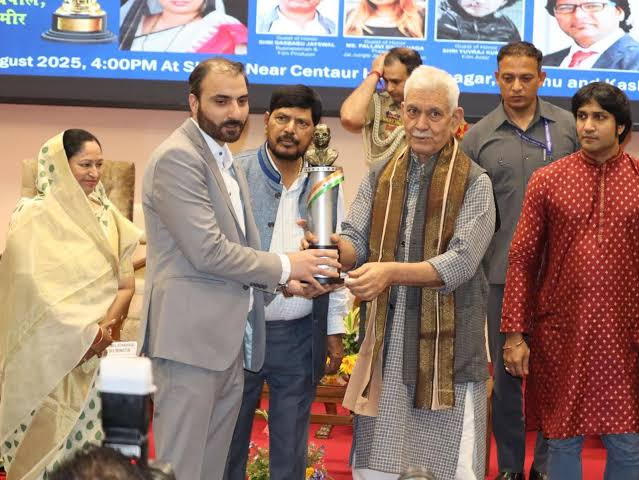
Beyond his administrative responsibilities, Dr. Basharat Qayoom, IAS, has also received recognition for his contributions to public service. He was honoured with the Bharat Ratna Dr. B. R. Ambedkar Award 2025 at a ceremony held at the Sher-i-Kashmir International Conference Centre (SKICC), Srinagar, attended by Lieutenant Governor Manoj Sinha and Union Minister of State for Social Justice and Empowerment Ramdas Athawale. This recognition adds another significant milestone to his public service journey and offers a fitting occasion to acknowledge his work and commitment during his tenure in Pulwama.
On the Ground
An administrator’s commitment is tested most directly during the harsh winter months, when heavy snowfall cuts off many areas from essential services.
In last 3 years, when severe snowfall hit the Valley, road blockages, power breakdowns, and health emergencies posed serious risks to remote habitations across Pulwama. Rather than relying solely on departmental status reports from his headquarters, Dr. Qayoom went directly to the field to assess ground realities.
He traveled through difficult, snow-covered routes to reach some of the most remote villages in the district, including Inderwali, Sangerwani, Abahama, Bagh, Khaigam, Ichgooze, and Shadimarg.
During these field visits, he inspected snow clearance along challenging stretches to ensure rural road connectivity was restored quickly. He reviewed the availability of essential commodities, including ration stocks and LPG cylinders, so that families living in cut-off hamlets would not face shortages. He also inspected the Kashmir Power Distribution Corporation Limited (KPDCL) workshop to monitor power restoration work, and visited District Hospital Pulwama and the Community Health Centre in Rajpora to verify that heating arrangements and emergency medical services were functioning properly.
For families living in Sangerwani and surrounding hills, seeing the head of the district administration standing in the snow to inspect their basic facilities sent a clear message: their well-being mattered just as much as those living in the main town.
The Fight Against Drugs
Substance abuse is among the most painful challenges facing families across Kashmir today. It cannot be addressed through enforcement alone; it requires saving young lives through awareness, empathy, and active community participation.
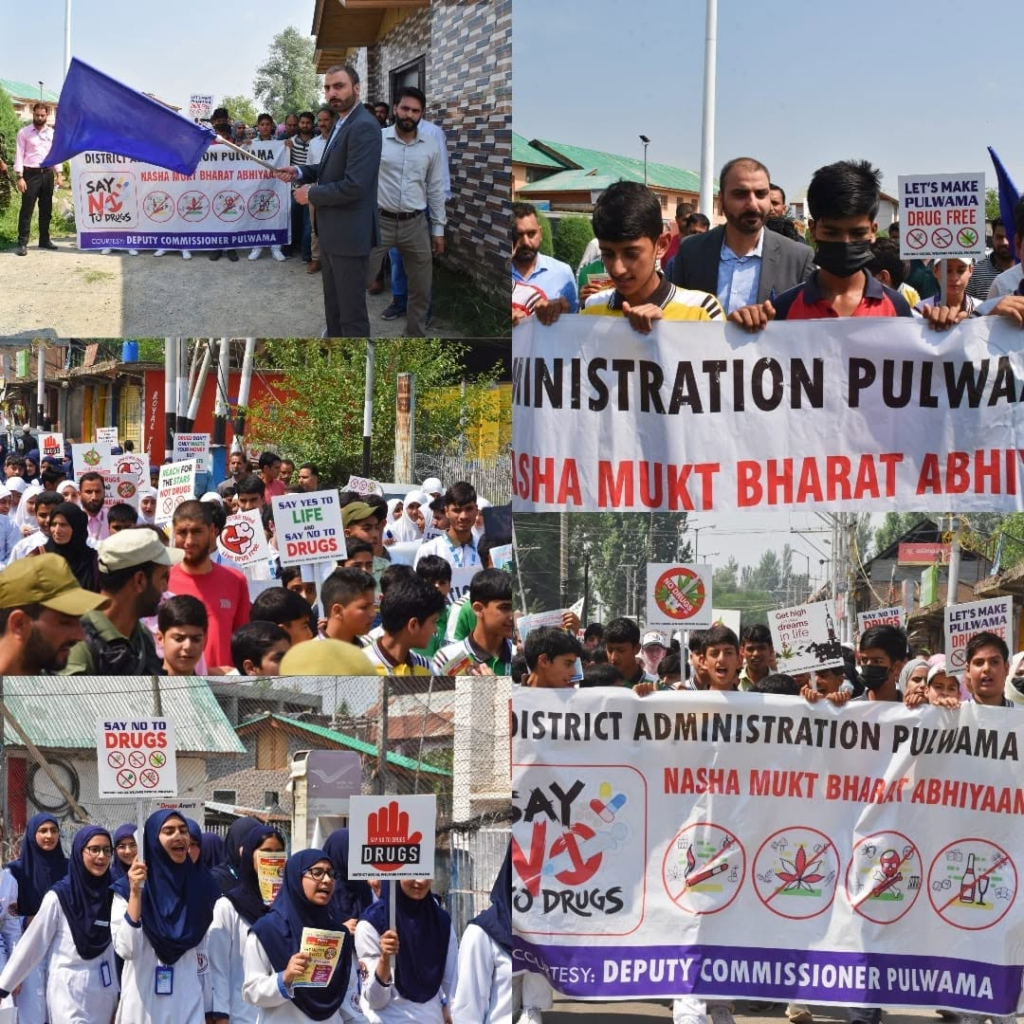
DC Pulwama took a deep, personal interest in this cause. Rather than treating anti-drug drives as routine bureaucratic exercises, he actively brought the campaign to the ground, encouraging youth and local civil society to take ownership of the fight.
For our team at Rahmoo Public Interest, his hands-on approach made a lasting impression. Under the Nasha Mukt campaign, the district administration partnered directly with RPI to hold a major awareness initiative right here in Rahmoo. The programme went beyond speeches, engaging local youth directly while combining awareness with a community medical camp and a blood donation drive.
Dr. Qayoom did not merely sign approvals from his office. He invested his personal attention into the issue, stood firmly behind grassroots efforts, and treated the protection of our youth as a shared responsibility. That level of personal concern and administrative backing gave families across the district real hope.
Pulwama Under the Floodlights
On the evening of 25 August 2025, Pulwama witnessed a historic moment that brought the district into the national spotlight for sportsmanship and youth engagement.
Under bright floodlights at the Pulwama Sports Stadium, the district hosted its first-ever day-night cricket match as part of the Royal Premier League. Thousands of spectators from across the district and neighboring areas gathered under the night sky, filling the stands with infectious enthusiasm and cheering for local talent.
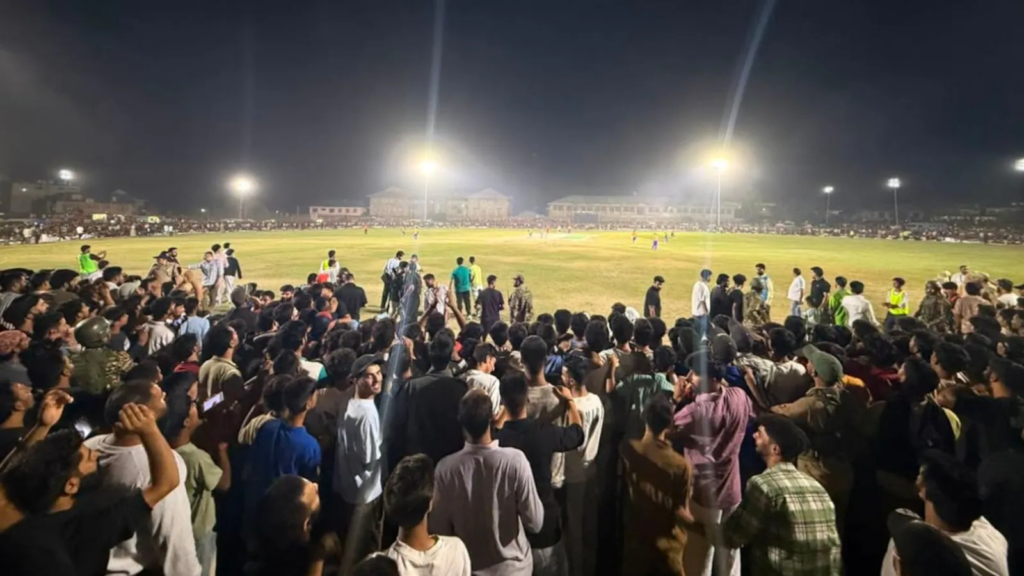
The significance of that evening echoed far beyond the Valley. On 31 August 2025, during the 125th episode of his monthly radio broadcast Mann Ki Baat, Prime Minister Narendra Modi spoke about Pulwama’s first day-night cricket match. He commended the vibrant atmosphere, the large attendance of young people, and the growing sporting culture in Jammu and Kashmir.
The tournament was driven by the dedication of local sports organizers, players, and enthusiastic supporters who worked hard to make it happen. At the same time, the district administration under Dr. Qayoom provided vital administrative clearances, logistical support, and security coordination to ensure the landmark event was conducted smoothly.
For a district whose youth have often sought greater avenues to showcase their talents, that night provided a stage of national pride. It proved what can happen when local initiative is met with strong administrative backing.
Building Everyday Infrastructure
Alongside these prominent milestones, Dr. Qayoom oversaw steady progress across essential public infrastructure:
- Drinking Water Networks: Under the Jal Jeevan Mission, his administration regularly reviewed the execution of piped water schemes across rural Pulwama. Reviews focused on resolving ground-level bottlenecks in borewells, water-quality testing, and distribution networks to improve clean water access for rural households.
- Healthcare Upgradation: In February 2024, the foundation stone for a modern 50-bed Critical Care Block at District Hospital Pulwama was laid virtually by the Prime Minister as part of nationwide healthcare strengthening. The project aims to expand critical and emergency care facilities within the district, reducing the need to refer critical patients to Srinagar.
In coordinating these projects, Dr. Qayoom worked in close partnership with departmental teams, recognizing that sustainable development requires collaborative institutional effort.
A Sincere Farewell
Public administration is an ongoing journey. Pulwama still faces important challenges. Road networks across several belts need wider upgrades, drinking water projects require continuous monitoring, and rural employment remains a vital concern for our youth.
Yet, when an administrator sets a high standard of accessibility, decency, and responsiveness, it leaves a lasting impression on the community.
Dr. Basharat Qayoom earned the respect of the people of Pulwama because he was an officer who listened, visited the ground when conditions were tough, and pushed long-pending public issues toward resolution.
From the editorial desk of Rahmoo Public Interest, we express our sincere gratitude to Dr. Basharat Qayoom, IAS, for his distinguished service to our district and for the respectful attention he gave to the voices of local citizens.
We congratulate him on his appointment as Commissioner of the Srinagar Municipal Corporation and CEO of Srinagar Smart City, and we wish him the very best in his new responsibilities.