Rahmoo (officially designated as Romu) is a prominent village located in the Rajpora tehsil of Pulwama district, within the Indian-administered Union Territory of Jammu and Kashmir. Situated approximately 7 kilometers west of Pulwama town, the village is renowned for its vast orchards, deep-rooted Sufi traditions, and its role as a regional hub connecting the Pulwama, Budgam, and Shopian districts.
1. History and Etymology
The identity of Rahmoo is inseparable from the 14th-century Sufi saint Hazrat Ruma Reshi.
- Founding: Local tradition suggests the village emerged as a settled community around the presence of the saint during the reign of Kashmir’s last Hindu queen, Kota Rani (1323–1338 CE).
- The Reshi Tradition: Ruma Reshi was a cornerstone of the Kashmiri Reshi movement, which emphasized meditation, asceticism, and environmental harmony.
- Hagiography: Oral histories attribute extraordinary longevity (claimed at 322 years) to the saint. While these accounts blend folklore with history, they establish Rahmoo as a site of “ascetic seclusion” rather than a mere administrative settlement..
2. Geography and Climate
Rahmoo is situated on the fertile Karewa plateaus—ancient lacustrine deposits—at an elevation of approximately 1,805 meters (5,922 feet).
Climate Table
| Season | Temperature Range | Characteristics |
| Winter | -3°C to 5°C | Heavy snowfall; crucial for spring water reserves. |
| Summer | 15°C to 30°C | Mild and pleasant; ideal for fruit maturation. |
| Precipitation | ~500 mm (Annual) | Rain primarily March–Sept; snow in winter. |
The village’s topography is defined by undulating plains and the Romshi Nallah, a stream that provides vital irrigation but also presents seasonal flooding risks.
3. Demographics
Based on the 2011 Census and subsequent sociological observations:
- Population: Approximately 5,030 residents.
- Composition: Predominantly ethnic Kashmiri Muslims (mirroring the district average of ~95%).
- Literacy: Historically recorded at 39.85% in 2011, though regional literacy in Pulwama has seen upward trends toward 63%–82% in recent years.
- Social Structure: A joint family system is common, with an average household size of 6.9 persons. Economic status is largely determined by land and orchard ownership.
4. Economy: The Fruit Bowl
The backbone of Rahmoo’s economy is horticulture.
- Apple Dominance: The village contributes to the Pulwama district’s massive output, which helps Jammu and Kashmir provide nearly 70% of India’s apples.
- Land Use: Approximately 70% of the village’s 647.9 hectares is dedicated to agriculture.
- Emerging Infrastructure: The inauguration of the Rohmoo Bridge in April 2025 has significantly reduced transport costs for farmers, facilitating faster access to markets in Srinagar and beyond.
5. Culture and Religion
Rahmoo is often referred to as part of the Pir Waer (Abode of Saints).
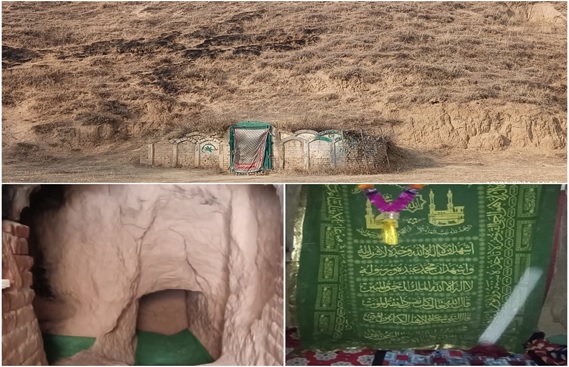
- Ruma Reshi Cave: A natural rock formation (5m wide, 3m high) where the saint meditated. It remains a primary pilgrimage site.
- Shrine of Hazrat Syed Mohammad Qasim (RA): Known for its annual Urs, a religious festival held every August that attracts thousands of devotees.
- Syncretism: The local culture reflects a blend of Islamic Sufism and indigenous Kashmiri traditions, emphasizing peace and spiritual devotion.
6. Infrastructure and Challenges
Education & Health
The village hosts approximately 16 schools, including the Government Higher Secondary School Rahmoo. However, the Primary Health Centre (PHC), established in 2002, has faced decades of “infrastructure lag,” leading to recent government inspections in late 2024 to finalize incomplete facilities.
Connectivity
A major milestone was reached on April 15, 2025, when Chief Minister Omar Abdullah inaugurated the 50-meter Rohmoo Bridge. This bridge ended a decade of isolation for 80 surrounding villages.
Community Advocacy
The Rahmoo Public Interest (RPI) group, a youth-led collective, has been instrumental in:
- Building “orchard roads” through manual labor to help farmers.
- Conducting anti-drug campaigns to combat the rising threat of narcotics in the region.
- Advocating for the macadamization (paving) of internal village roads, such as those in Alamdar Colony.